OCTOBER 14, 2026
Hip-Hop Was Invented to Stop the Fighting
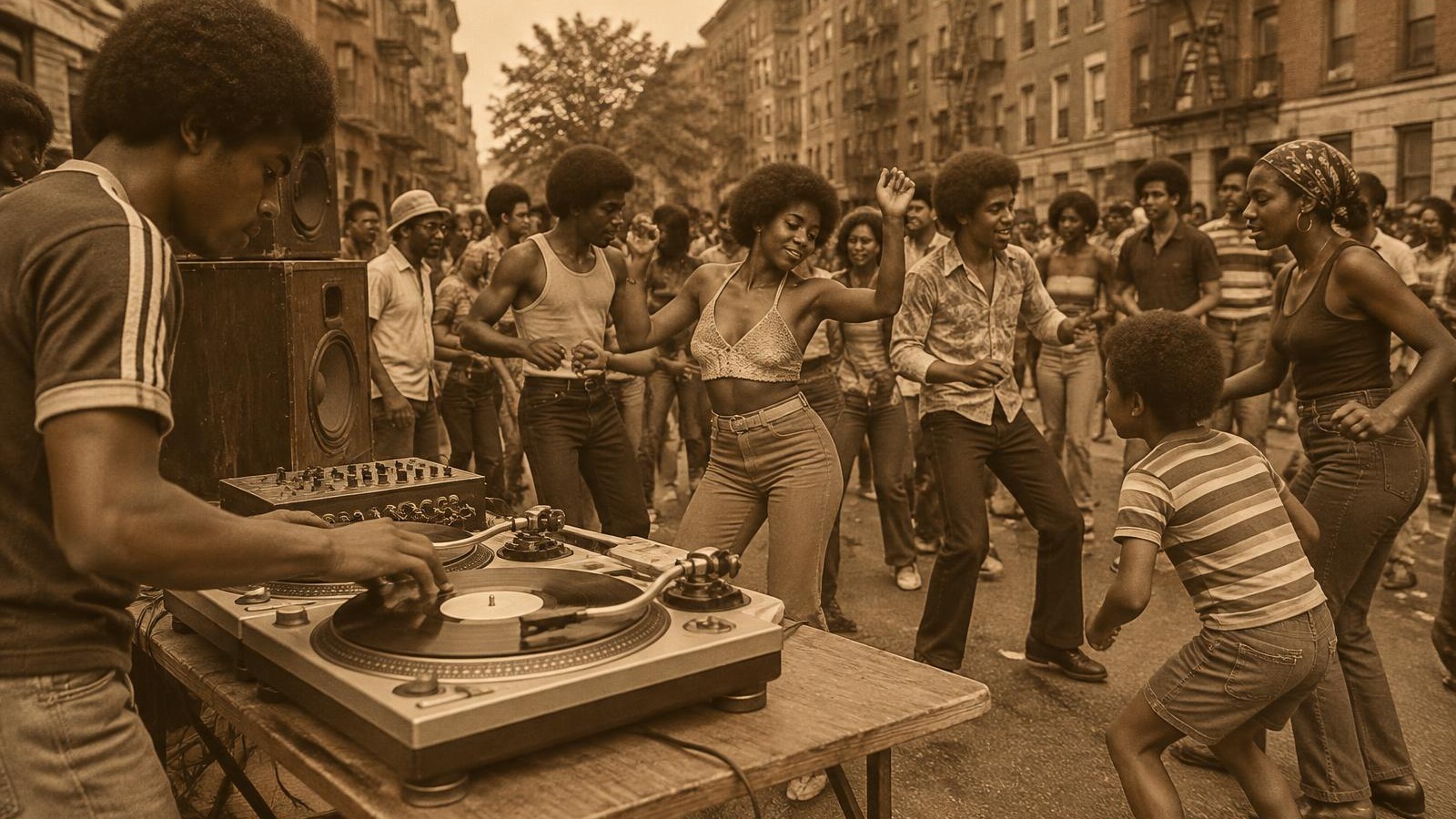
Ask most people where hip-hop started and they'll say "the Bronx" and "parties." True — but incomplete. Hip-hop was born as an *alternative*: give the energy somewhere to go that isn't violence.
In the early 1970s, the Bronx was burning — gangs, poverty, buildings abandoned. In 1971, rival gangs signed an actual peace treaty. And into that moment stepped Afrika Bambaataa, a former gang member who started throwing parties and built the Universal Zulu Nation on a radical idea: compete with creativity instead of weapons. Battle with your skills — your rhymes, your dance, your art — and let the crowd decide who wins.
Read that again. The *battle* was the peace treaty in action. Competition was the replacement for beef, designed on purpose.
🥊 The Battle Was Always the Point
Every element of this culture carries that DNA:
- MC battles: destroy you with words so nobody has to do it with hands.
- Dance battles: your crew's honor settled on cardboard, not concrete.
- DJ battles: respect earned by being undeniable, not feared.
The culture's founders weren't naive. They knew young men with something to prove will prove it somewhere. So they built an arena where proving it made you famous instead of dead or locked up.
📉 What Got Lost
Somewhere along the way, the entertainment industry figured out that real conflict sells even better than staged competition — and started rewarding the drama instead of the skill. Beef became a marketing plan. The arena leaked back into the street.
But the original blueprint never stopped working. Every cypher that stays about bars, every battle event with judges and rules and a crowd there for the craft — that's the founding technology still doing its job: taking energy that could turn destructive and giving it a stage, a structure, and a scoreboard.
Final Takeaway: If you're an artist in this culture, you inherited a tool, not just a sound. Hip-hop at its root is conflict converted into art. Put it in the lyrics. Keep it on the stage. That's not being soft — that's being faithful to what the founders actually built, and it's how this culture outlives everybody who tried to use it for something smaller.
— BÜBU · If I can't do it, you don't need it · @bubutheproducer · bububeats.com
🎧 *Need this sound? This week's beats are live in the store → bububeats.com*