NOVEMBER 14, 2026
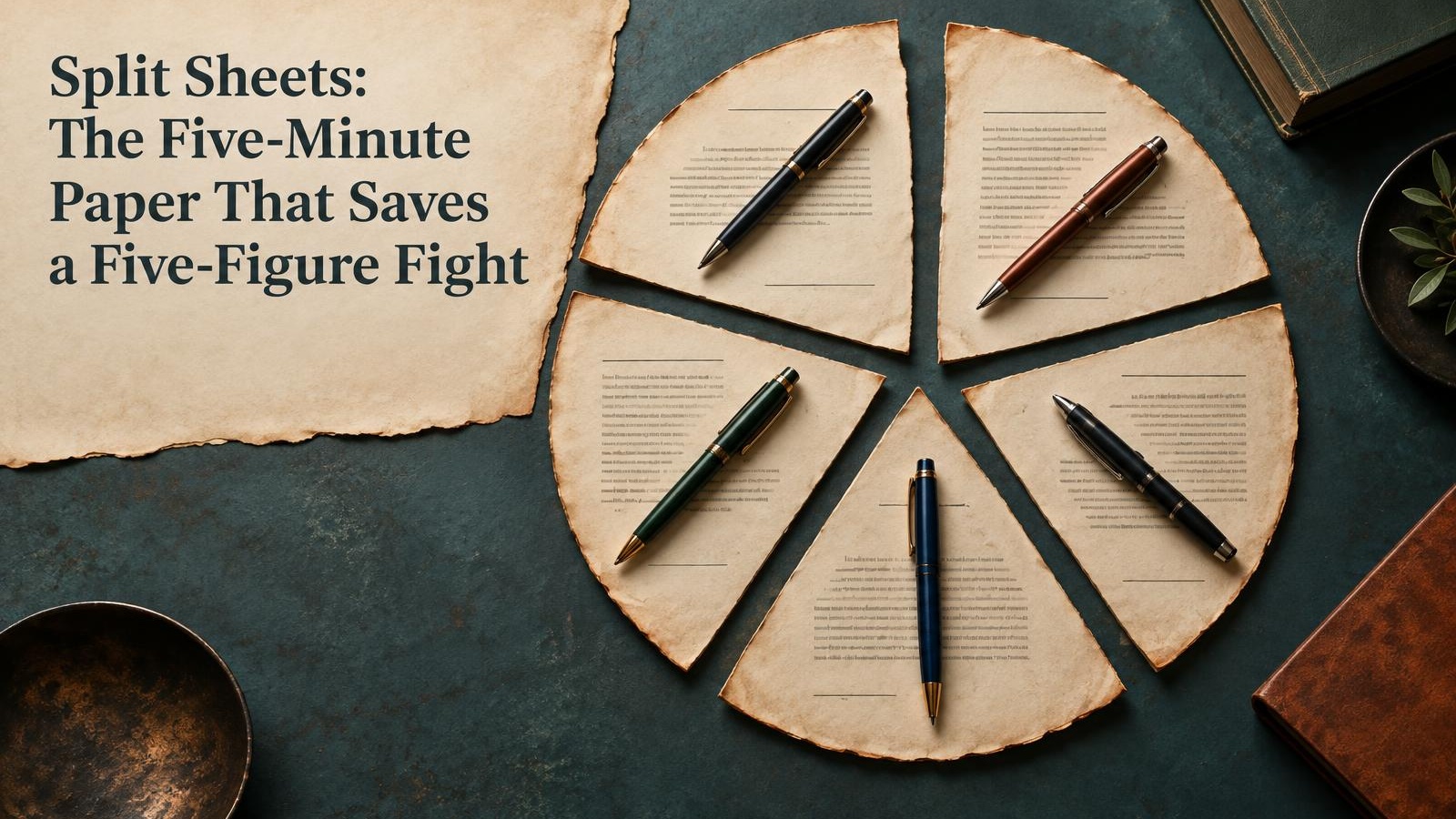
Split Sheets: The Five-Minute Paper That Saves a Five-Figure Fight
Five minutes. One page. That's the whole job — and it's the paper that stands between your song and a fight that can cost you five figures, a placement, or a deal you never even hear about because it died quietly in somebody's inbox.
📄 What a Split Sheet Actually Is
A split sheet is one page that says, in plain writing: this is the song, these are the people who wrote it, and this is the percentage each person owns. Everybody signs it. It's dated the day the song is made. That's it.
It's not a contract negotiation. It's not a lawyer's afternoon. It's a record of the truth while everybody in the room still remembers it the same way — which is the only time that will ever be true.
🧠 Why the Day Matters
The day the song is made is the only day everyone agrees easily. You're all in the room. The work is fresh. Nobody's thinking about money yet, because there isn't any yet. The split is obvious, because everybody just watched it happen.
Six months later, the same conversation is a different conversation. Memory fades — who wrote the bridge, who changed the line, who was even in the room. And if the song starts earning, success changes the math in everybody's head. The percentage that felt fair when the song was worth nothing feels very different when it's worth something. The five-minute paper you signed on day one is the only thing that settles that argument before it starts.
🧮 The Math of an Unsigned Split
Say a sync fee is on the table — ten thousand dollars for your song in a placement. Or a remix deal like the Spotify tool from Wednesday's post, where a fan's version of your record starts earning and the money is supposed to flow back to the owners.
In both cases, the buyer asks one question before the money moves: who owns this, and can you prove it fast? If the answer is a shrug, a group chat argument, or "we'll figure it out," the deal stalls. And stalled deals don't wait. They die — or they go to the next song on the list, the one whose paperwork is already clean.
Now run that same ten thousand across a catalog. One unsigned song is a delay. Five unsigned songs is a reputation. Ten is a catalog a buyer learns to skip. The five-minute paper isn't paperwork — it's the difference between a check and a story about a check that almost came.
And one more thing the paper tells you: a collaborator who won't sign the day of, in the room, isn't a problem to solve later. It's a signal right now. The people who plan to be fair sign fast. The ones who stall are telling you exactly how the money conversation will go later.
📋 The Habit
The rule is simple, and it's non-negotiable in my sessions: the sheet gets signed in the room, the day the song is made, every time. No exceptions. No "we'll do it later." Later is where splits go to die.
It takes five minutes. It costs nothing. And it's the cheapest insurance in the entire music business — one page that protects every dollar the song will ever earn.
🤝 What About the Beat?
Same page, same day, same conversation. If the record sits on a beat you leased or bought exclusive, the producer's share belongs on the sheet too — right there with the writers, while everybody's in the room. The beat is part of what the song is, and the paperwork should say so from the start. A clean split sheet and a clean license, signed the same day, mean the song can travel anywhere — a placement, a sync offer, a remix — without anybody having to reconstruct who owns what from memory. Ownership you can prove in five minutes is ownership that pays.
Final Takeaway: A song's money starts the day it's made, and the paper starts the same day. Five minutes, one page, everybody signs, every time. The split sheet doesn't make you less of an artist — it makes you an artist whose songs can actually get paid.
🎧 *Need this sound? This week's beats are live in the store → bububeats.com*
The 1,000-Fan Blueprint — free. You don't need a label to pick you: 1,000 true fans × $200 a year = $200,000. Get the math and the complete system.
Get the free Blueprint → https://stats.sender.net/forms/eVO34o/view
— BÜBU · If I can't do it, you don't need it · @bubutheproducer · bububeats.com